Brazil: Indigenous Museum stands alone
The crisis at the National Museum of Indigenous Peoples
 Portugués
 Espanhol
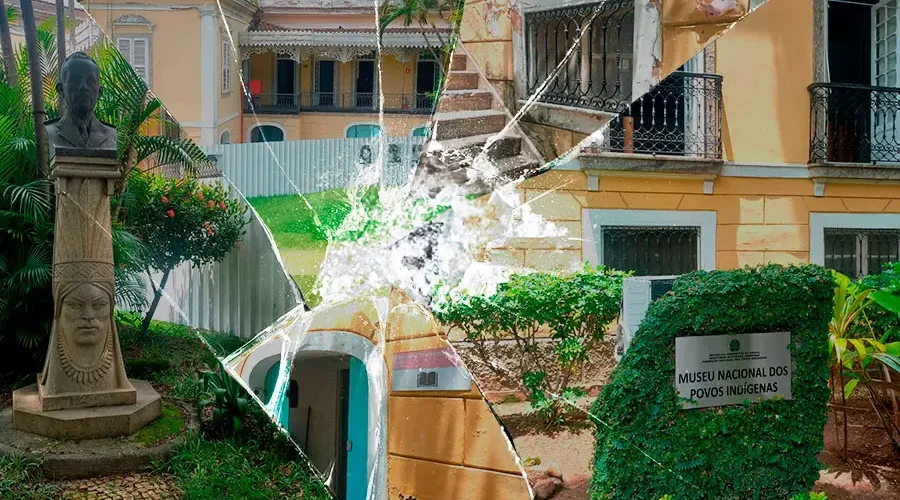
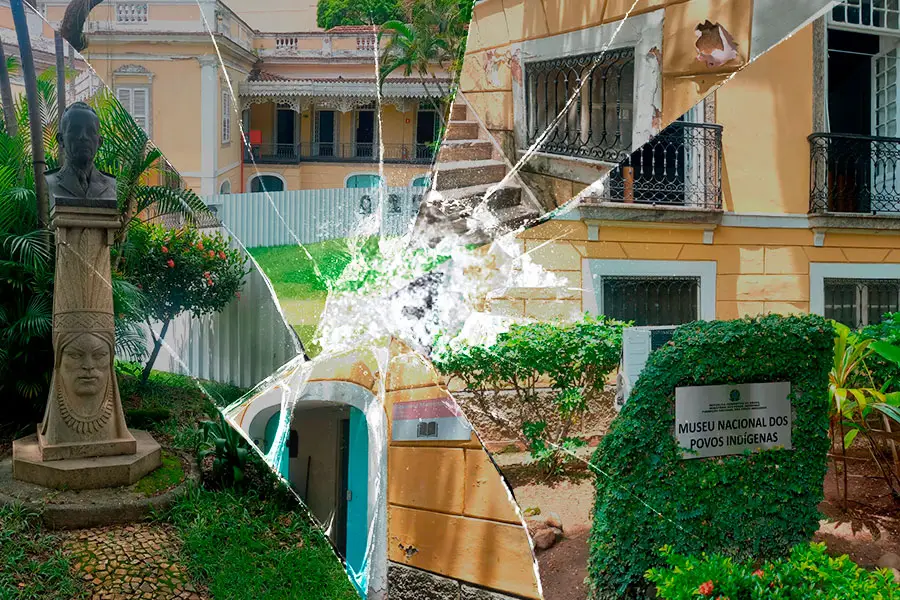
Brazil’s National Museum of Indigenous Peoples (MNPI) seems to be a museum without friends, abandoned, crying out for help. After 73 years of history, the old Museum of the Indian (renamed to mark its commitment to a decolonial view of Indigenous history and culture), a key player in the fight against prejudice and the abuses that have historically afflicted Brazil’s indigenous peoples, finds itself adrift.
Following its renaming, the museum was headed from 2023–2024 by Fernanda Kaingang, the first Indigenous director, a historic appointment framed as a decolonial turning point. Yet the period was marked by internal disputes and administrative turbulence. Since 2025, Juliana Tupinambá has taken over leadership against a background of institutional fragility and unresolved tensions.
The creation of the Ministry of Indigenous Peoples was one of the first measures taken by the Lula government in 2023. It was a step forward in renewing the Brazilian federal government’s commitment to indigenous rights, following eight years of managed obsolescence, particularly during the Temer and Bolsonaro governments, which saw indigenous peoples and their lands as impediments to national progress.
This occasion was marked by many hopeful words, most particularly when it promised a ‘Ministry of the Indigenous peoples, for the indigenous peoples’. Unfortunately, in the three years since then, with the Lula government facing a recalcitrant congress dominated by agrobusiness interests, political realities have put the brake on expectations. The MNPI has become another casualty of the political deadlock surrounding Indigenous policies in Brasilia.
According to people close to the institution, lack of clear commitment to the Museum´s future, coupled with the unstable and inadequate funding of its parent organization – Brazil’s National Indian Foundation (FUNAI) – have put the MNPI at risk.
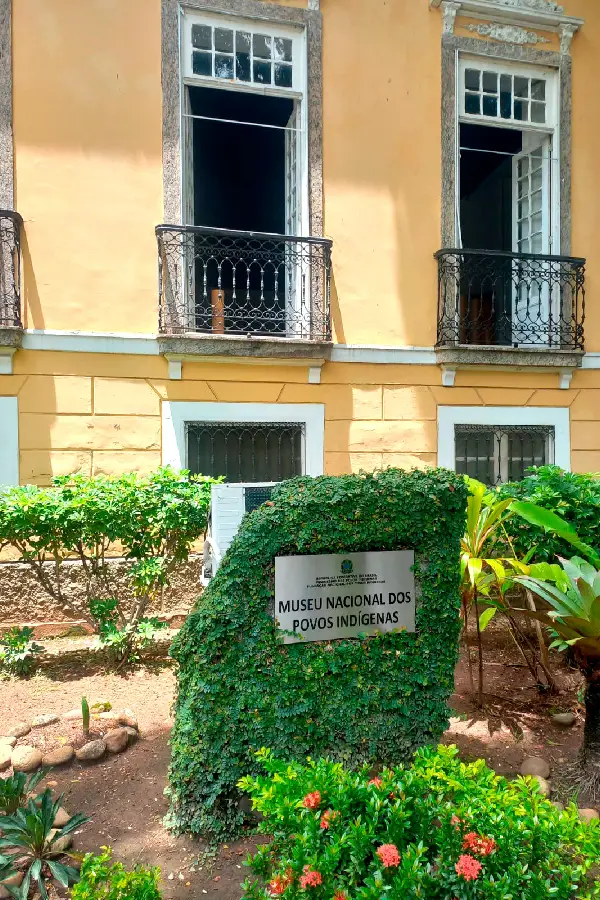
The museum faces an uncertain future due to the lack of stable funding. Photo: Marcos Colón/Amazônia Latitude.
Power struggles, personal vanities, technical and administrative weaknesses and outside interests seem to be flourishing at the Museum and the result is an institutional crisis that undermines the MNPI´s ability to function, particularly as a public institution for education.
If this situation continues, the Museum may quietly collapse – an unacceptable blow to national memory and the future of Indigenous rights in Brazil.
A treasure in peril
Countless Brazilian and foreign anthropologists, such as Antônio Carlos de Souza Lima, Bruna Franchetto, Marcos Maia and Milton Guran, have used the Museum as a resource for their research and training. Its unparalleled collections of documents and artefacts have subsidized theses and dissertations across the world.
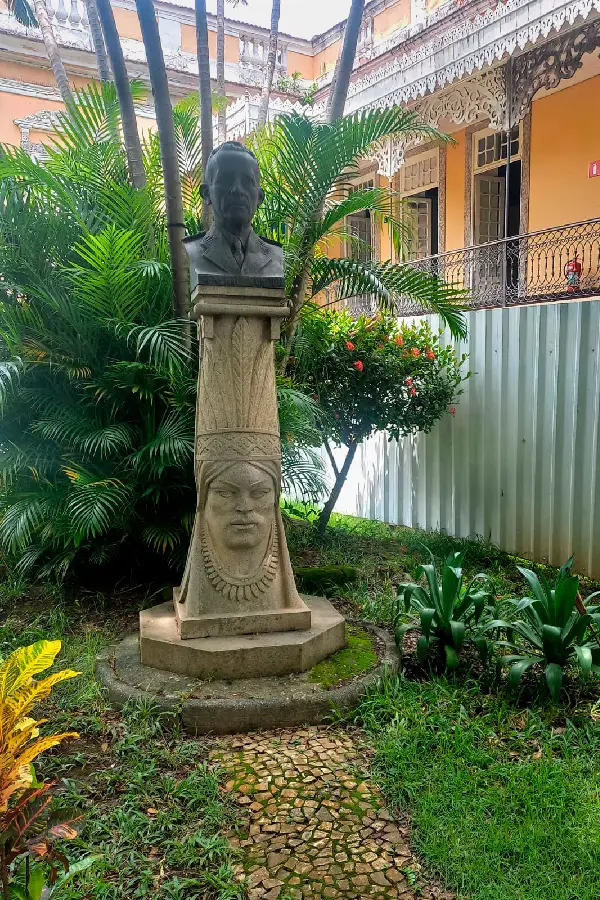
The museum has been an academic and symbolic reference for generations of researchers. Photo: Marcos Colón/Amazônia Latitude.
More importantly, the Museum’s collections have been used by researchers working to document Indigenous control of territory and the often bloody and illegal processes by which Native lands were stolen. Today, members of this community observe the state of the institution with perplexity, as it stumbles on, caught between the archival preservation and propagation of memory and a lack of political commitment to defining a meaningful role for this activity.
The Marechal Rondon Library, one of the most important ethnological libraries in the world, is at real risk of being emptied. The library not only contains a priceless collection of ethnological works, it also preserves documents belonging to Brazil’s first Indigenous Administration agency, the old Serviço de Proteção aos Índios (SPI).
The library itself is named after the founder of the SPI, Cândido Rondon, whose memory is contested. Cast as a national hero, Rondon’s guideline for the functionaries of what was then known as the Indian Protection Service was ‘die if you must; never kill’. Despite this slogan, the SPI’s overall goal was to ‘civilize’ Brazil’s Native populations out of existence in order to free up land for speculation: a ‘great peaceful siege’, in Rondon’s words.
Recent administrative decisions regarding the library have fueled fears that this collection will be broken up, with ethnological materials separated from their accompanying archives and libraries. This is cast as a temporary solution to the structural difficulties of the building where the archives are housed, but many fear it may become permanent.
If this happens, it will be a profound blow to the heritage of Brazilian indigenism, casting light upon one of the Museum’s main difficulties: while today the MNPI is eager to remake itself as caretaker of Indigenous memories, it is also the de facto caretaker of the memories of Brazil’s Indigenous Service and bureaucracy. The fact that the library is named after a man who is portrayed by some as a humanitarian and by others as a cynical colonialist highlights this contradiction. The lack of a clear vision for what the Museum is supposed to be seems to be preventing a comprehensive resolution of this problem.
Behind closed doors
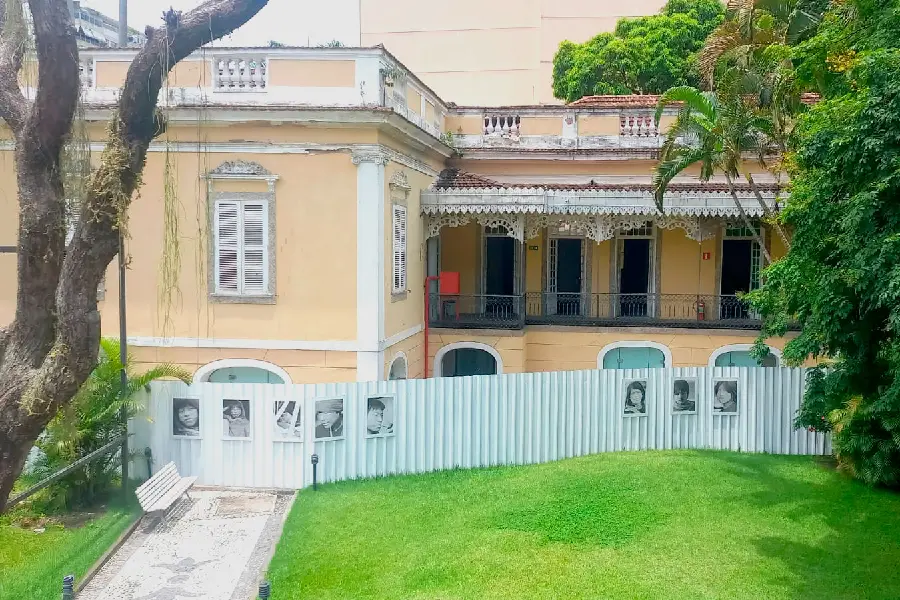
The institution faces a crisis marked by internal disputes and administrative fragility. Photo: Marcos Colón/Amazônia Latitude.
In the corridors of the Museum, the word on the grapevine describes an environment marked by strategic silences and internal disputes. There is talk of secretive decision making, of irregular hirings, and of museological practices that cannot display a huge collection accumulated over a century. For now, the Museum seems to be able to take more than adequate care of its technical reserves. How and when – if ever – these will be made available for public viewing and research is at question, given that the Museum itself has been closed to the public for ‘necessary repair work’ for more than a decade.
Some MNPI workers believe that current museological policy has adopted a minimalism that borders on institutional nihilism. Collections are maintained and well-stored, but there seems to be no plan to fulfil the second primary role of museum: that of being a publically accessible educational resource.
There is a growing fear of the symbolic erasure of central figures in the Museum’s history, such as Darcy Ribeiro, Berta Ribeiro, Marshal Rondon, as well as the elimination of employees who have dedicated their lives to the MNPI. Institutional memory and identities are being weakened and even erased.
Administrators over the past ten years have eschewed broad dialogues with the career civil servants who still work in the institution, many of whom accuse administrators of selective listening, often paying attention only to their favorites. Voices with a long institutional history, they say, are rarely heard in decision-making spaces, with operational guidelines drawn up by people with little practical experience with the MNPI.
In this confused situation, the narratives that any public museum must create as part of its educational role are becoming fragmented and collective meanings are being lost.
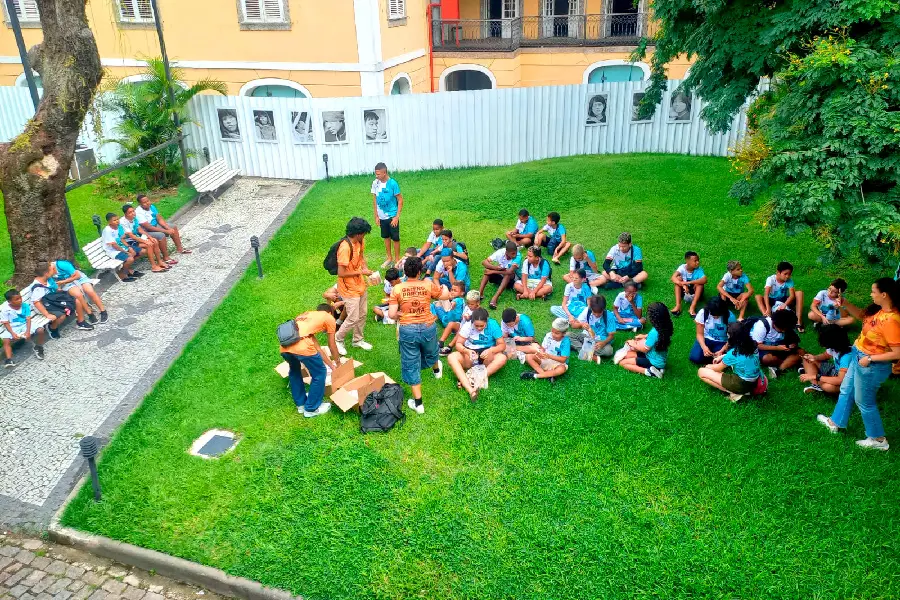
Despite the crisis, the National Museum of Indigenous Peoples retains its potential as an educational space. Photo: Marcos Colón/Amazônia Latitude.
A wonderful resource left idle
The case of the collection repatriated from Lille, in Belgium, is emblematic. Approximately 600 pieces of the Kayapó and Enawenê-Nawê peoples were returned to Brazil in 2024, after more than two decades of languishing in reputedly inadequate conditions in the Natural History Museum of Lille.
The material includes feather ornaments, ritual objects (such as the Tapirapé Big Face Mask) and educational items produced in the early 2000s. The material was returned to Brazil after lengthy negotiations, conducted with the support of the Federal Public Prosecutor’s Office.Today it is receiving proper care to preserve it as part of the Museum’s technical reserve.
The collection remains idle, however, stored away from public or researcher access. An important and newsworthy living heritage has thus been relegated to storage without any plans – or indeed, conditions – for opening to public access, or even for research.
Meanwhile, the Museum’s main building, which houses the Rondon Library, is plagued by leaks and inadequate climate control and electrical systems. It needs urgent renovations in order to make it an adequate space for the care and display of connections. Recent MNPI administrations, however, seem to have spent a significant portion of their time and energy on institutional trips and expenses that have not yielded improvements to the Museum’s infrastructure.
Behind the Museum’s doors, staff claim they are subject to pressures that affect decision-making and administrative continuity, with few channels of dialogue open to rectify the situation. Work suffers – in an environment marked by emotional exhaustion, demotivation, and work-related illness, prolonged disputes, and the weakening of internal processes.
This has not happened suddenly. There has been a continuous process of institutional erosion, in which the loss of technical and human resources has directly compromised the museum’s ability to function.
The role of FUNAI
One of the Museum’s core problems is that it is officially part of FUNAI, Brazil´s Indigenous administrative bureaucracy, and not an entity deserving of its own independent budget (such as the Smithsonian Institute in the US and its associated National Museum of the American Indian).
FUNAI has come under intense attack over the past two decades as Brazil’s agrobusiness classes seek to steal vast swathes of indigenous lands and use them for producing export crops. In 2015, when the Museum closed its doors, FUNAI had a budget of around BRL 650 million, some 40 million more than it had in 2022, at the end of the Bolsonaro regime. Since then, FUNAI’s budget has crept up to a BRL 1.1 billion for the upcoming year. Unfortunately, cumulative inflation in Brazil over the past decade has been around 80 per cent. This means that only in the last couple of years has FUNAI’s budget returned to 2015 levels. Meanwhile, the pressures upon Brazil’s Indigenous communities and lands have radically increased.
FUNAI’s budgets have of necessity been channeled into protecting Indigenous peoples from illegal invasions and exploitation, as well as aiding the communities in recovering from the health disasters created by the Bolsonaro regime during the COVID epidemic.
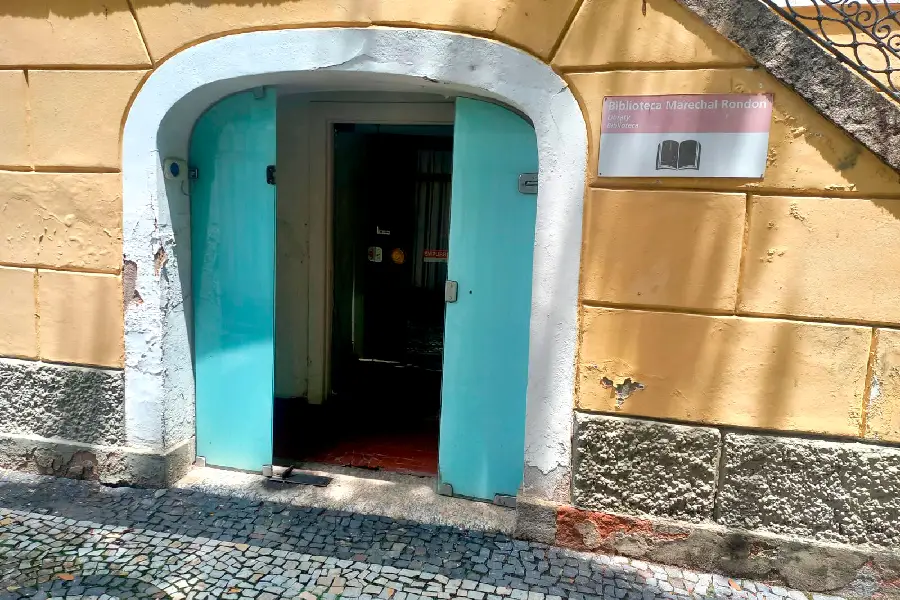
Closed spaces reflect an institution in crisis and without public access. Photo: Marcos Colón/Amazônia Latitude.
Critical as the Museum is to indigenous memory, it has been forced to subsist on the leftovers from FUNAI’s core budget. The result is an underfunded institution that depends on third-party charity and promises in order just to recover its pre-2015 levels of functionality as an institution for public education.
Meanwhile, it’s all the Museum can do to keep the lights on and retain its core mission of taking care of its collections. Even these, however, are now scheduled to be dispersed throughout various locations for safekeeping, with no clear commitment as to when (or even if) they will be able to be housed under one roof and opened for public access.
Recovering the Museum’s public role requires more than rhetoric: it demands the rebuilding of connections; the re-establishment of procedures. It requires the recognition that memory, work, and institutional dignity go hand in hand.
Where, ultimately, are the true friends of the National Museum of Indigenous Peoples? Where are the companions of so many other equally fragile public museums in Brazil? Who protects these institutions from becoming the victims of internal disputes, opportunism, and administrative negligence?
As the popular saying goes: have you come to bring us something or take something away?
Marcos Colón is the Southwest Borderlands Initiative Professor of Media and Indigenous Communities at Arizona State University’s Walter Cronkite School of Journalism and Mass Communication. He is a writer, director, and producer of Beyond Fordlândia: An Environmental Account of Henry Ford’s Adventure in the Amazon (2018) and Stepping Softly on the Earth (2022), and the author of The Amazon in Times of War (2024). He is also the organizer of Utopias Amazônicas (2025).
Editor & Publisher: Juliana Carvalho