
Carbon Credits and Indigenous Sovereignty in the Amazon
The disparity in carbon prices and the encroachment of 'carbon cowboys' expose the vulnerability of traditional communities in the face of global corporate interests
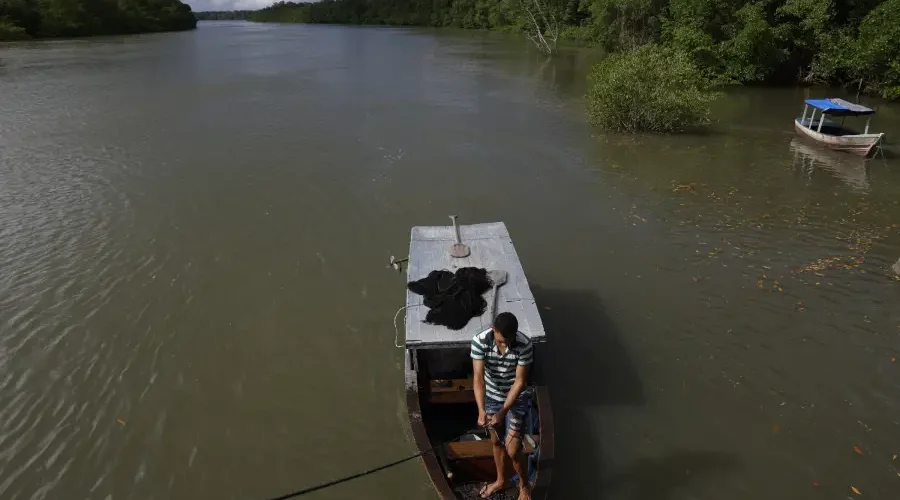
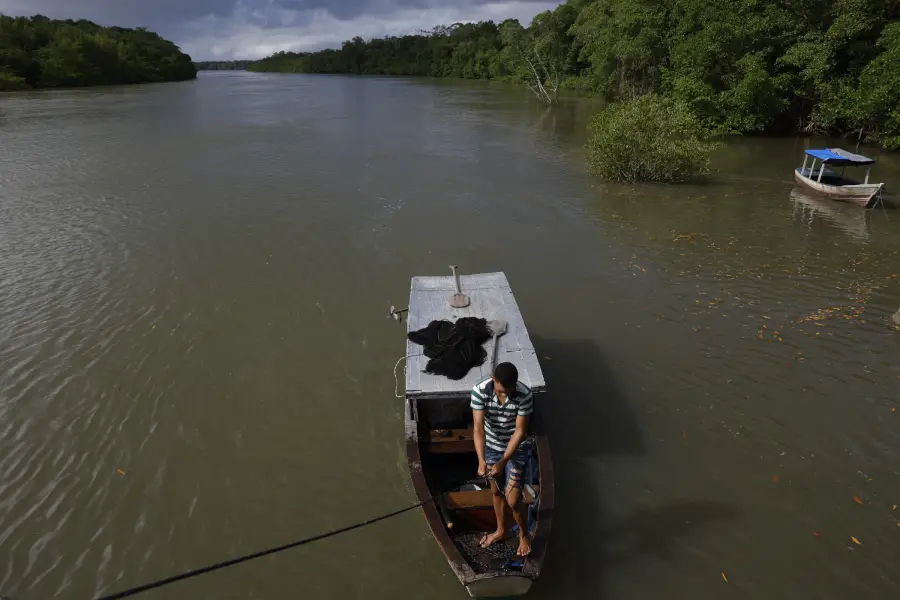
The defense of traditional territories and Indigenous sovereignty are central to the debates on the future of biomes and the global
carbon market. Photo: Fernando Frazão/Agência Brasil
 Portugués
The 2018 “Yellow Vest” protests in France forced a freeze on the national carbon tax at €44.60 per metric ton of CO₂ – well below the €100 mark long viewed as necessary to drive deep decarbonization. This political retreat offered a stark preview of a recurring global paradox: wealthy societies routinely resist paying the true environmental costs of their consumption.
While affluent nations buffer themselves from climate shocks through air conditioning and bottled water, vulnerable communities worldwide endure the immediate, lethal consequences of extreme heat, food insecurity, and environmental degradation. For Brazil, preserving the Amazon Rainforest is not an abstract policy debate; it is an existential necessity. Yet, the future of our Biomes remains besieged by internal greed and external exploitation.
Some major polluting nations have selectively supported REDD+ (Reducing Emissions from Deforestation and Forest Degradation) initiatives since 2018. However, the overarching geopolitical appetite remains fixed on resource extraction: minerals, timber, beef, and soy. Global market logic continues to prioritize commodity flows over the ecological integrity of our water, soil, and forest ecosystems, undermining genuine Sustainable Development.
This international demand aligns seamlessly with domestic special interests—illegal miners (garimpeiros), loggers, land-grabbers, and predatory agribusiness operators. Operating with historical impunity, these actors erase Indigenous traditional knowledge and dismantle local sustainability. They collaborate, directly or indirectly, with multinational extraction entities that have built revenue models around regulatory capture and political corruption in Brazil since the mid-20th century.
The structural fragmentation of the Amazon involves thousands of contractors and mega-corporations across mining, energy, and transport infrastructure. Historically, these entities have shown disregard for environmental protections and Indigenous rights. Systemic pressure on Indigenous lands severely threatens both local communities and the state officials tasked with protecting them.
The underlying doctrine imposed on the region is transparent: vacate the forest to make way for mining concessions, timber concessions, and sprawling monocultures of soy, beef and corn. This systemic land conversion, tracked meticulously by global bodies like the UN Food and Agriculture Organization (FAO), compromises our ecological heritage.
The siege on territories and regulatory fragility
Previous political administrations significantly loosened environmental licensing, enabling widespread ecological crimes. While current national leadership under President Luiz Inácio Lula da Silva has sought to rebuild environmental safeguards, severe structural challenges remain. Jurisdictional disputes between state governments and federal authorities over carbon rights have created market uncertainty, frequently exploited by unregulated “carbon cowboys“.
To generate legitimate carbon credits under REDD+, projects must scientifically demonstrate additionality – proving that the forest stands specifically because of carbon finance and rigorous management. However, speculative private interests managing billions of dollars threaten to sideline Indigenous self-determination.
The technical capacity of Brazil’s Ministry of Indigenous Peoples (MPI) and the National Indigenous Peoples Foundation (FUNAI) remains under-resourced when pitted against the capital and legal machinery of multinational agribusiness and mining giants. Furthermore, socio-economic friction persists as entrenched interest groups resist the legal recognition of Indigenous Land rights and the equitable distribution of climate finance.
The gap between regulated markets and the voluntary market

Protecting the Amazon demands full respect for Indigenous sovereignty, the institutional strengthening of environmental and Indigenous agencies, and a decisive end to the predatory extraction of resources. Photo: Alice Palmeira/Amazônia Latitude.
The North American/international investor better understands the comparative context between the compliance/regulatory market (such as the EU ETS, which fluctuates in the range of €80–€90/tCO2) and the voluntary carbon market (VCM), where forestry/REDD+ projects face pricing and integrity challenges ($2–$15/tCO2).
Establishing a transparent, legally sound REDD+ framework requires strict adherence to ILO Convention 169, ensuring Free, Prior, and Informed Consent (FPIC) for all Indigenous territories. Protecting the Amazon requires more than voluntary market mechanisms; it demands full respect for Indigenous sovereignty, institutional strengthening of Environmental and Indigenous Agencies, and a decisive end to predatory resource extraction.
The carbon pricing reality affects the Indigenous livelihoods, and requires the enhancement of institutional technical capacity in the Amazon and other forest territories in Brazil. Indigenous communities face severe technical and market-driven barriers when attempting to negotiate carbon credits with major corporations, largely due to the vast discrepancies between voluntary market prices ($2–$15/tCO₂) and compliance benchmarks, as well as their under-resourced institutional backing compared to multinational conglomerates.
The rise of ‘carbon cowboys’ and resource dispossession
These structural inequities leave traditional populations vulnerable to predatory “carbon cowboys” and speculative land grabs that threaten their cultural survival and sustainable future. To safeguard Indigenous sovereignty, policy solutions must focus on strengthening the technical and monitoring capacities of regulatory agencies like FUNAI, enforcing strict adherence to Free, Prior, and Informed Consent (FPIC) under ILO Convention 169, and establishing robust, legally secure frameworks that guarantee fair economic returns and true self-determination.
The stark divergence between compliance carbon markets – where European Union Allowances (EU ETS) robustly trade around €80–€90 per metric ton of CO₂ – and the voluntary carbon market (VCM), where forest-based REDD+ credits historically languish between $2 and $15 per ton, creates a profound structural inequity.
While industrial emitters’ trade carbon at high compliance values, the guardians of the world’s most vital carbon sinks – Indigenous Peoples – frequently face extreme poverty and marginalization. The meager financial returns filtering down through voluntary mechanisms fail to reflect the true ecosystem services provided by traditional stewardship, leaving communities vulnerable to predatory land speculation and systemic resource extraction.
Genuine sovereignty
For government entities such as Brazil’s National Indigenous Peoples Foundation (FUNAI) and the Ministry of Indigenous Peoples (MPI), bridging this gap demands a massive scaling of technical and technological capacity. To successfully navigate complex international climate finance architectures and defend Indigenous territories against sophisticated multinational agribusiness and mining conglomerates, regulatory agencies must implement rigorous monitoring, reporting, and verification (MRV) systems. This requires advanced geospatial tracking, independent scientific validation of carbon additionality, and bulletproof legal frameworks.
Crucially, safeguarding Indigenous rights in international carbon negotiations cannot be reduced to a purely technocratic exercise. It requires strict adherence to international standards such as ILO Convention 169, guaranteeing Free, Prior, and Informed Consent (FPIC) and FUNAI and the MPI needs to be strengthened with competent personnel – the right people in the right positions.
Only by coupling robust technological empowerment and institutional funding with absolute legal sovereignty for Indigenous communities can Brazil ensure that global carbon markets serve as instruments of genuine social justice and environmental preservation rather than modern mechanisms of resource dispossession.
José Renato de Castro Cesar is an Indigenist Specialist at the National Museum of Indigenous Peoples (MNPI / FUNAI). He holds degrees in Agricultural Sciences and Business Administration, an MSc in Tourism and Environment, an MBA in Tourism Economics, and a PhD in Environmental Sciences and Conservation. He is a writer, researcher, and former university professor in Brazil.
Finishing: Juliana Carvalho
Editorial Director: Marcos Colón



